Jyoti
Jyoti
G-INews, New Delhi : In a move that could redefine the global circular economy, researchers at the Indian Institute of Technology Madras (IIT Madras) have successfully developed a pioneering, eco-friendly method to extract high-value metals from electronic waste (e-waste).The study, published in the prestigious Journal of Sustainable Metallurgy, marks a departure from traditional, hazardous recycling practices by utilizing biodegradable “Deep Eutectic Solvents” (DES) to recover metals like copper and iron from printed circuit boards (PCBs).
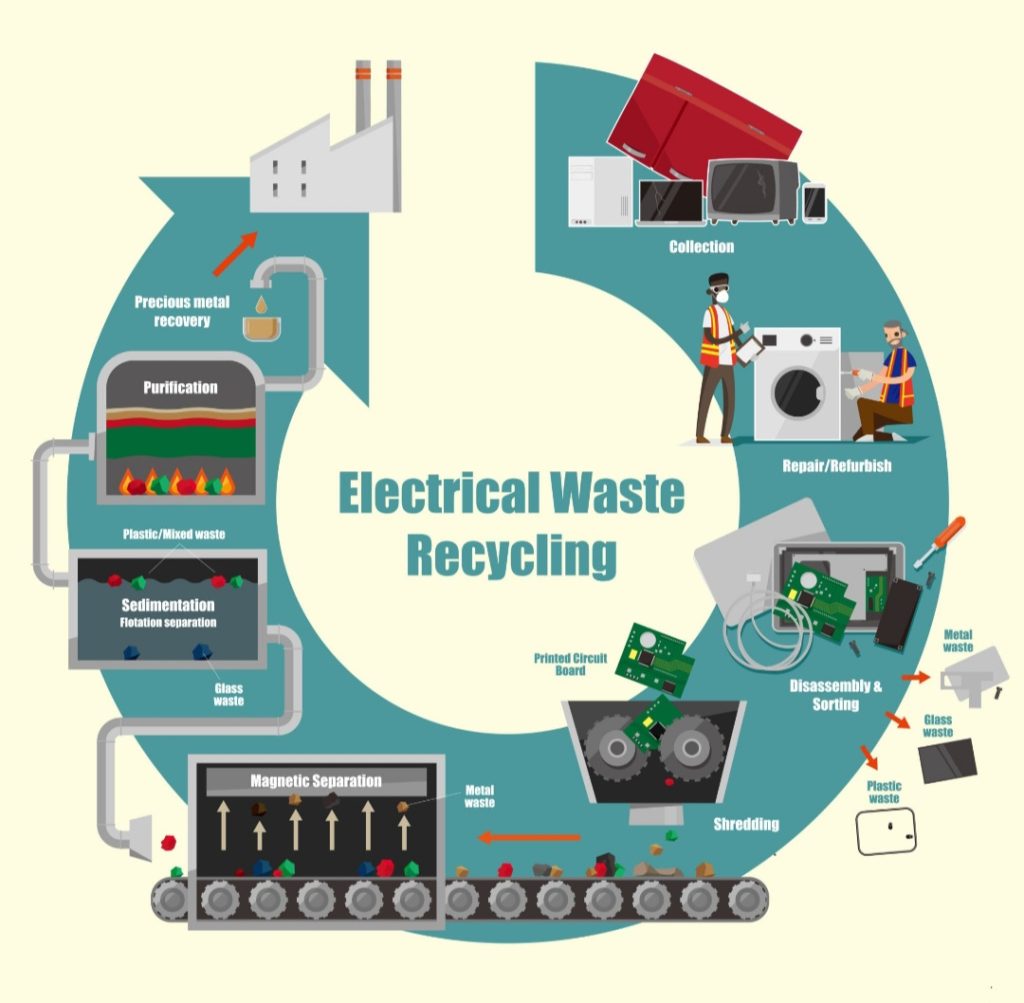
Ending the Era of Toxic Acid LeachingFor decades, the recycling industry has relied on Pyrometallurgy (incineration) and Hydrometallurgy (acid leaching). While effective at extracting metals, these methods release toxic dioxins into the air and create massive quantities of hazardous liquid waste.The IIT Madras team—led by Prof. Ranjit Bauri, Prof. S. Pushpavanam, and PhD scholar Ms. Sinu Kurian—has replaced these harsh chemicals with a “green” alternative. Their process uses solvents derived from natural compounds that are biodegradable, non-toxic, and water-efficient.”This green recovery process can significantly reduce pollution while minimizing the demand for virgin metal mining,” says Prof. Ranjit Bauri. “It aligns perfectly with India’s sustainability and net-zero commitments.”Beyond Recycling: The Power of NanotechnologyPerhaps the most innovative aspect of the research is the direct synthesis of copper nanoparticles. Rather than simply recovering bulk metal, the process allows the extracted copper to be converted into high-value nanoparticles.
These are essential for advanced industrial applications, including:Conductive inks for flexible electronics.Antimicrobial coatings for medical equipment.Industrial catalysts for chemical manufacturing.A Boost for India’s Circular EconomyIndia is currently the third-largest producer of e-waste globally. With only a small fraction recycled through formal, safe channels, this innovation provides a scalable solution for “Urban Mining.”By using Hydrogen Peroxide (H_2O_2) as a mild oxidant, the process ensures that the only by-products are water and oxygen, making it one of the cleanest metal recovery systems developed to date.
What’s Next?With laboratory validation complete, the researchers are now looking toward industrial scale-up. IIT Madras is actively seeking collaborations with recycling industries for technology transfer and pilot-scale implementation.Quick Facts: The IIT Madras Green Method
Green solvent recycling, Deep Eutectic Solvents, sustainable metallurgy, urban mining India, copper nanoparticle synthesis